
Corporate Responsibility and the Recurring Haze Crisis in Southeast Asia


The transboundary haze that blankets Southeast Asia is not a natural disaster. It is the predictable outcome of political choices, weak governance, and corporate impunity. As fires rage across Sumatra and Kalimantan, sending toxic smoke into Malaysia, Singapore, and beyond, the question is no longer whether the region has a haze problem — it is why the political will to solve it has evaporated, and what corporations must do in the absence of meaningful enforcement.
The 2026 Crisis: A Familiar Catastrophe
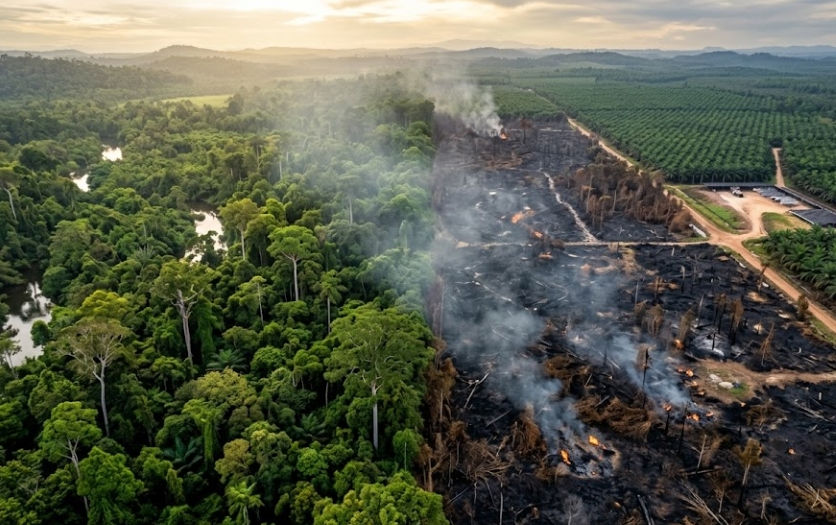
In September 2026, air quality in Serian, Sarawak, reached a hazardous Air Pollution Index (API) of 517, prompting a state of emergency declaration. Singapore's Pollutant Standards Index climbed into unhealthy territory, and smoke was observed as far as southern Vietnam. Indonesian authorities reported over 202,000 hectares of forest and land burned across 36 provinces since the start of the year, with weekly spikes of 400,000 new acute respiratory infection cases.
The proximate cause is clear: fires deliberately set to clear land for plantation expansion. Nearly 99% of fire ignitions are human-caused, driven by a simple economic calculation — burning is far cheaper than mechanical clearing. Satellite data consistently shows that a substantial share of large-scale fires occurs within or adjacent to industrial concessions, including those linked to major corporate groups such as Wilmar International, Sinar Mas, and Genting.
Yet the crisis is not merely a technical failure of fire suppression. It is, as Friends of the Earth Asia Pacific argues, "the result of systematic damage to forest and peatland ecosystems through deforestation, peatland drainage, the expansion of monoculture plantations, and weak oversight of corporate activities".
The Political Will Deficit

The ASEAN Agreement on Transboundary Haze Pollution (AATHP), signed in 2002 and ratified by Indonesia only in 2014, was meant to prevent exactly this scenario. It requires member states to monitor fires, share information, and take action to control them. But more than two decades later, experts say the agreement's core weaknesses remain unaddressed. As political science lecturer Dr. Tunku Mohar Tunku Mokhtar noted, the AATHP's main flaw is its reliance on national measures, which "could prove ineffective when pollution involved government or government-linked entities".
The deeper problem is the absence of political will. ASEAN's consensus-based decision-making and principle of non-interference have repeatedly paralyzed regional responses. When Malaysian Prime Minister Anwar Ibrahim called for a review of ASEAN haze mechanisms in September 2026, he was met with familiar rhetoric about cooperation — but no binding commitments. A regional Alert Level 3 was activated on August 26, requiring daily situation reports from member states, yet the ASEAN Coordinating Centre for Transboundary Haze Pollution Control remains unable to operate at full capacity because its founding agreement has not been fully ratified.
Meanwhile, Malaysia's long-delayed Transboundary Haze Act — which would empower its courts to prosecute local companies operating abroad — has stalled in government, with the environment ministry announcing it will not continue drafting the legislation. The country lacks extraterritorial legislation to hold its own corporations accountable for fires they cause in Indonesia.
Legal Framework: Binding on Paper, Toothless in Practice

The AATHP is legally binding, but it is also fundamentally cooperative rather than punitive. Article 27 provides only for consultation and negotiation, with no binding enforcement mechanism, no fines, and no regional court. The agreement is characterized by "low obligation, limited legal precision, and weak delegation". As one analysis concluded, it "does not contain any enforcement or dispute resolution mechanisms" and only came into full effect in 2014 with Indonesia's ratification.
This legal vacuum has real consequences. When Indonesian authorities investigated 19 companies linked to wildfires in Sumatra and Kalimantan, civil society groups in Malaysia demanded transparency — but had no legal mechanism to compel disclosure or prosecute the Malaysian-owned entities involved. Greenpeace Malaysia's interim country representative put it bluntly: "Transparency is required so responsible companies can clear their names and non-compliant ones can be held accountable".
Singapore's Transboundary Haze Pollution Act 2014 stands as a partial exception, with extraterritorial reach and provisions for investigating entities whose conduct causes haze pollution in Singapore. But even this law has been activated only sparingly, and its threshold — requiring haze to reach levels warranting investigation — has rarely been met.
Why the Environment Has Slipped Down the Agenda
The weakening of environmental enforcement in Southeast Asia is not accidental. It reflects a political economy in which land-based revenue and resource-linked growth remain central to national economies. Plantation agriculture generates tens of billions of dollars annually in export earnings, creating powerful incentives for continued land conversion at the expense of environmental stability.
At the same time, governments have become "increasingly deft at appearing to take environmental action while preserving the development-first priorities that cause environmental harm". The recurring haze crisis is framed as a seasonal disaster or a climate anomaly — a narrative that transforms a preventable governance failure into something that appears natural and beyond control.
This framing serves a political purpose. When climate change is treated as the main driver, policy responses become reactive — water bombing, burn bans, emergency preparedness — rather than addressing the structural causes: who benefits from the system, which institutions sustain it, and why prevention remains so weak. As the Lowy Institute observed, "it is governance failures, distorted incentives, and weak accountability that determine whether those fires become regional disasters".
What Corporations Should Do
In the absence of robust legal enforcement, corporate responsibility becomes not merely a matter of ethics but of regional stability. The coalition of civil society groups behind the 2026 haze protests made clear that responsibility does not lie solely with the Indonesian government: "Companies that operate in, have investments in, hold shares in, maintain business relationships with, or exercise control over the plantation and forestry industries in Indonesia must also be held accountable".
Several concrete measures are available to corporations that are serious about breaking the cycle:
1. Enforce zero-deforestation and zero-burn policies across the entire supply chain. Some major palm oil producers have already adopted such policies, including Astra Agro Lestari, Indonesia's second-largest palm oil producer, which committed to protecting forests and peatlands across all subsidiaries and third-party suppliers. But commitments mean little without independent verification and public reporting.
2. Publish concession maps and supply chain data. The ASEAN Parliamentarians for Human Rights have called for all plantation firms holding concessions in fire-prone landscapes to mandate the publication of concession maps across all ASEAN member states. This would allow regulators, investors, and civil society to identify which companies operate in fire hotspots and hold them accountable.
3. Transition to mechanized land clearing. The economic logic that makes burning attractive must be reversed. Companies can invest in mechanical clearing techniques, even where they are more expensive, and work with smallholders to provide alternatives to fire-based land preparation.
4. Support community-based fire prevention. Rather than relying on reactive firefighting, corporations should invest in community fire brigades, early warning systems, and alternative livelihoods that reduce dependence on slash-and-burn agriculture.
5. Lobby for stronger regulation. Corporations that genuinely want to operate responsibly have an interest in clear, enforceable rules that penalize non-compliant competitors. Industry associations such as GAPKI can play a constructive role by advocating for transparent enforcement rather than resisting it.
The Path Forward
The 2026 haze crisis has exposed the limits of ASEAN's soft-law approach and the consequences of allowing political distraction and economic expediency to override environmental governance. The region's legal framework is not merely weak — it is structurally incapable of holding transnational corporations accountable for cross-border harm.
Breaking this cycle requires action on multiple fronts. ASEAN must move beyond the principle of non-interference and establish binding enforcement mechanisms, including a regional court or tribunal with authority to impose sanctions on corporations responsible for trans boundary pollution. National governments, particularly Malaysia and Singapore, must enact and enforce extraterritorial legislation that holds their corporations accountable for environmental damage caused abroad. And corporations themselves must recognize that the costs of inaction — reputational, financial, and ecological — are mounting.
The haze is not inevitable. It is a choice made by governments that prioritize short-term economic growth over long-term sustainability, and by corporations that externalize the environmental costs of their operations. Until that choice is reversed, millions of people across Southeast Asia will continue to breathe toxic air while the region's political leaders offer only rhetoric and delay.


