
The Unbeatable Alliance: How Visionary Foresight and Deep Empathy Define the Modern Leader

Updated: Oct 3, 2025
In the relentless churn of the 21st-century marketplace, two leadership qualities are often pitted against each other: the hard-edged, visionary strategist who sees the mountaintop, and the soft-hearted, empathetic coach who tends to the climbers. This is a false dichotomy. The most potent and transformative leadership does not choose between vision and empathy; it forges them into a single, unstoppable force.
The most profound blueprint for this synthesis comes not from a modern business school, but from the wellspring of ancient Chinese philosophy. When combined with the latest insights from modern leadership theory, it reveals a timeless formula for building resilient, innovative, and profoundly human organizations.
The Visionary's Compass: Seeing the "Dao" in the Destination
A visionary leader articulates a compelling future state—a "what could be" that is more inspiring than "what is." In modern terms, this is Simon Sinek’s "Start With Why," the magnetic North Star that galvanizes action.
Ancient Chinese wisdom, particularly Daoism, offers a deeper layer to this concept. The visionary leader is not just a dictator of direction but one who seeks to understand and align with the Dao (the Way)—the fundamental, natural order of the universe. A vision that fights the Dao is like a river trying to flow uphill; it exhausts itself. A vision that flows with the Dao gains immense momentum.
Lao Tzu, in the Tao Te Ching, wrote: "The sage does not accumulate for himself. The more he uses for others, the more he has for himself. The more he gives to others, the more he possesses of his own."
This reframes the visionary's goal. It is not a vision for personal aggrandizement, but a vision of a harmonious and prosperous future for the entire system. It is a vision of service, inherently tied to the well-being of those who will help realize it.
The Empathetic Foundation: The Mandate of "Ren" (Benevolence)
If vision is the compass, empathy is the ground upon which the leader stands. Modern neuroscience and leadership studies, like those championed by Daniel Goleman on emotional intelligence, confirm that psychological safety—a direct product of empathetic leadership—is the single greatest predictor of team effectiveness. Empathy is not mere sympathy; it is the ability to understand the feelings, thoughts, and perspectives of others.
This is precisely what Confucianism championed with its core virtue of Ren (仁, often translated as benevolence or humaneness). For Confucius, a leader without Ren was not a leader at all.
Confucius stated: "The gentleman understands what is moral. The small man understands what is profitable."
A leader with Ren operates from a place of genuine care and moral integrity. They practice shu (reciprocity), considering the impact of their actions on their people. This creates the trust and loyalty that is the bedrock of any enduring enterprise. In modern parlance, this is the foundation of a "High-Trust Culture" where vulnerability is strength, and collaboration thrives.
The Synergy: When the Mountain and the River Become One
The true magic happens when vision and empathy are woven together. A vision without empathy is a tyranny—a distant, unrelenting goal that burns out its people. Empathy without vision is a rudderless ship—a kind and supportive environment that drifts without purpose.
Ancient Synergy: The Leader as a "Wu Wei" Conductor
The Daoist concept of Wu Wei (effortless action) perfectly illustrates this synergy. It is not inaction, but a highly effective form of action that arises from perfect alignment with the Dao and one's people. A leader who has cultivated both a clear vision (aligned with the Dao) and deep empathy (understanding the capacities and desires of their team) can lead with a light touch.
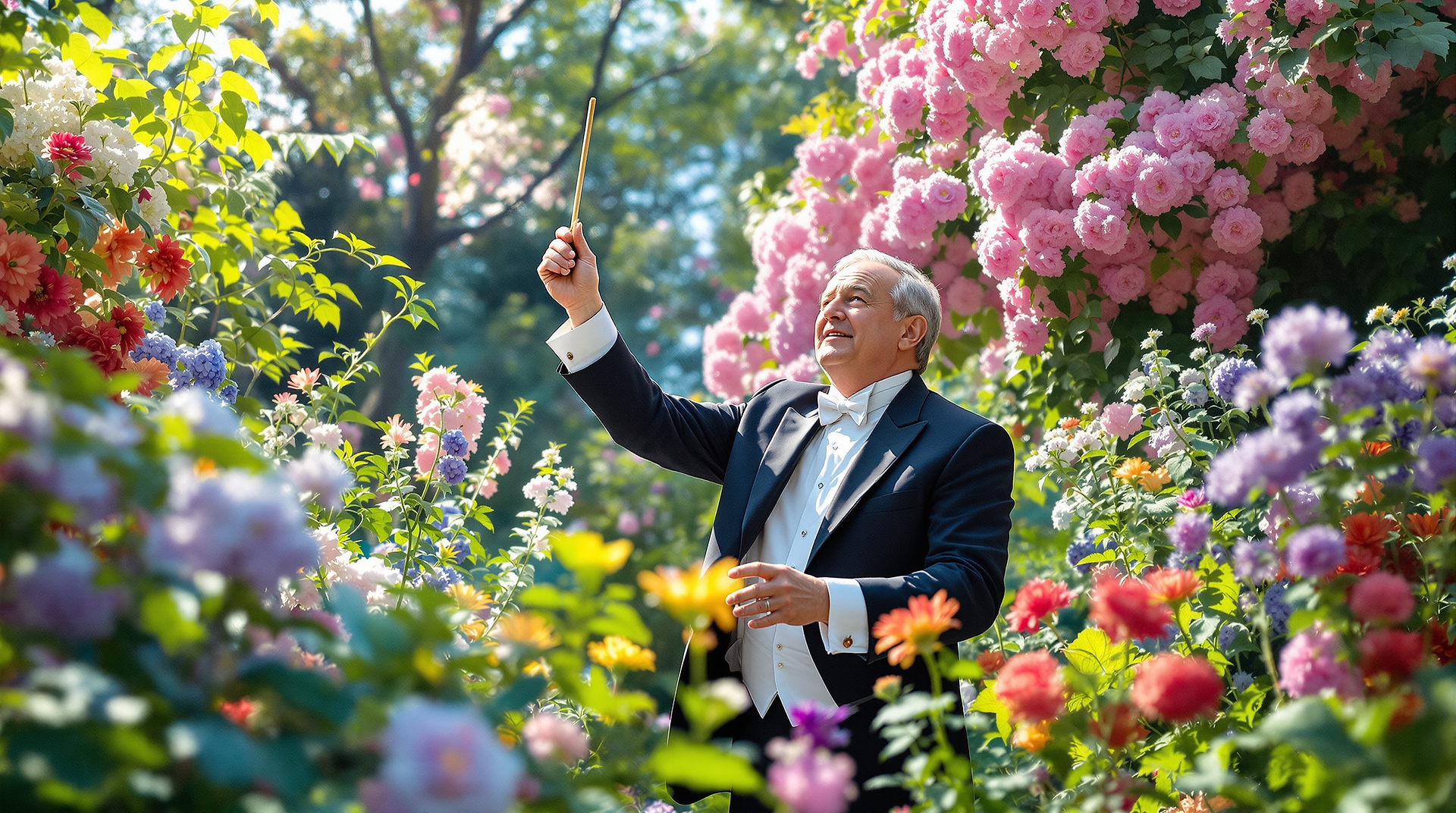
They are like a skilled conductor who knows the symphony (the vision) so intimately and understands the musicians (empathy) so deeply that their slightest gesture elicits a powerful, harmonious performance. They don't need to micromanage; they create the conditions for excellence to emerge naturally. This is the ultimate state of "flow" for an organization.
Modern Synergy: The Servant-Strategist
This ancient model is echoed powerfully in modern Servant Leadership theory and Transformational Leadership. The servant-leader, a concept articulated by Robert K. Greenleaf, leads by putting the needs of their team first to ensure they are equipped, empowered, and able to perform at their highest potential. This is empathy in action. The transformational leader, meanwhile, inspires and motivates followers to achieve extraordinary outcomes by aligning them with a shared, compelling vision.
The synthesis is the Servant-Strategist: a leader whose grand vision is serviced by their deep empathy, and whose empathy is given direction by their grand vision. They don't just say, "We will climb that mountain." They ask, "How do we equip every single climber for this journey? What do you see from your vantage point? How can we make the climb itself a source of growth and fulfillment?"
Cultivating the Synergy: A Leader's Practice
How can a leader today cultivate this powerful alliance?
1. Practice "Listening to Understand" (Empathy): Before dictating strategy, spend time in the field. Practice active listening not to reply, but to comprehend. This is the practice of Ren and Shu.
2. Articulate the "Why" with Humanity (Vision): When communicating your vision, connect it to the human experience. Explain not just what the company will achieve, but who your team will become and how they will impact the world. This aligns the corporate "Dao" with the personal "Dao" of each member.
3. Lead with "Wu Wei" by Empowering Others: Create a clear vision and a culture of trust, then step back and allow your team to find their own path to the goal. Your role shifts from commander to facilitator and remover of obstacles.
4. Reflect Continuously: As the I Ching (The Book of Changes) teaches, the only constant is change. A wise leader constantly reflects, adapting both their vision and their understanding of their team's needs in a dynamic dance.
Conclusion: The Timeless Mandate
The challenges of our time—remote work, global competition, and the demand for purpose—require a leadership paradigm that is both anchored and agile. The ancient Chinese sages, in their profound wisdom, understood that true power lies not in force, but in harmony. The latest leadership science now confirms this.
The leader who can hold a picture of a magnificent future in one hand and feel the pulse of their people with the other is the leader who will not only succeed but will also leave a legacy. They are the ones who understand that the most visionary path forward is always, and inevitably, paved with empathy.


